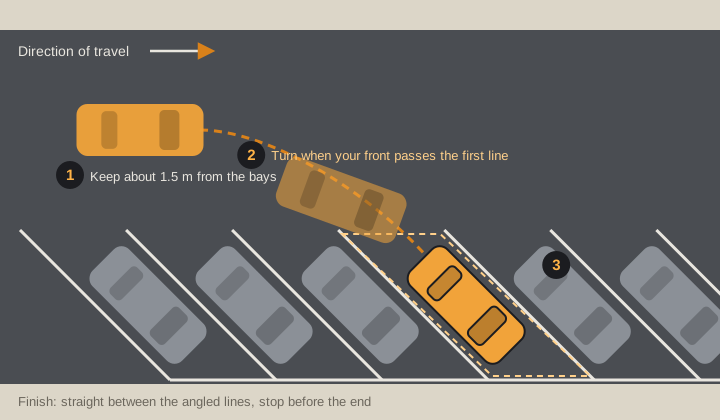
To angle park, drive slowly along the aisle about 1.5 m from the angled bays, in the direction the bays point. Signal, and when the front of your car passes the first line of the empty bay, turn towards it. Straighten as the car lines up with the angled lines, drive in slowly and stop before the end of the bay.
Key takeaways
- Only enter angled bays from the direction they point. The aisle is usually one-way.
- It is easier than a 90° bay because you only need a partial turn.
- Turn in when your front passes the first line of the bay.
- When leaving, reverse out slowly: the front of your car swings as you go.
What is angled parking?
Angled parking means parking in bays that are set at an angle to the aisle or kerb, often around 45° to 60°. It is common in car parks with one-way aisles and on some streets. Because the bays are angled in your direction of travel, you can drive in with a gentle turn.
Which way do you enter angled bays?
Drive in from the direction the bays are angled towards you, which is usually the one-way direction of the aisle. Trying to enter from the other direction needs a very sharp turn and usually goes against the traffic flow. In a few places signs require back-in angle parking. Follow them where they apply.
How to angle park in 4 steps
These steps assume the angled bays are on your right. If they are on your left, do the mirror image.
-
Approach and position the car
Drive slowly along the aisle in the direction the bays point, about 1.5 m from the ends of the bays.
-
Choose a bay, signal and check
Pick an empty bay, check your mirrors and signal. Look out for pedestrians walking between the parked cars.
-
Turn in when your front passes the first line
When the front of your car passes the first line of the bay, turn towards the bay. You need less steering than for a 90° bay. Aim for the middle of the space.
Tip: Turning too early brings your car close to the vehicle on the near side.
-
Straighten and stop
As the car lines up with the angled lines, straighten the steering. Drive in slowly and stop before the end of the bay, then apply the parking brake.
How to leave an angled parking bay
Check all around, including your blind spots. Reverse very slowly in a straight line until the front of your car is clear of the vehicle beside you, then steer so the front swings in the direction of the aisle. Stop, select a forward gear and drive on in the aisle’s direction.
Common angled parking mistakes (and how to fix them)
- Entering from the wrong directionYou need a very sharp turn and may be driving against the one-way flow. Go round and approach from the right side.
- Turning too earlyYour car cuts towards the vehicle on the near side. Wait until your front passes the first line.
- Turning too lateYou end up across the far line or in two bays. Start turning a little earlier.
- Reversing out without lookingCars in the aisle and pedestrians behind you are easy to miss. Reverse out at walking pace and keep checking.
What do examiners look for?
Angled parking is less often a named driving test manoeuvre than parallel or bay parking, but it is an everyday skill. The same standards apply: slow and controlled, good observation, and finishing inside the lines.
Frequently asked questions
What angle are angled parking bays?
They are commonly around 45° to 60° to the aisle or kerb, but it varies from place to place.
Is angled parking easier than bay parking?
Usually, yes. Because the bays are angled towards your direction of travel, you only need a partial turn to drive in.
Can you reverse into an angled parking bay?
Only where signs allow or require it. Some places use back-in angle parking, but normally you drive into angled bays forwards.
Can I practise angled parking online?
Yes. Parking Simulator is a free browser-based simulator with a one-way aisle of 45° bays where you can practise angled parking between cars, with a score and examiner-style feedback.