To park forwards in a bay, approach slowly and leave extra space between you and the bays, about 2 m if the aisle allows. Start turning just before the front of your car reaches the bay, steering towards its centre. Straighten as the car lines up with the bay lines, then drive in slowly and stop before the end line. When you leave, reverse out very slowly and check all around.
Key takeaways
- Approach wide: the more room you leave, the easier the turn.
- Start turning just before your car reaches the bay, aiming for its centre.
- Stop before the end line, kerb or wall.
- Leaving is the hard part: reverse out slowly and keep looking around.
What is forward bay parking?
Forward bay parking means driving nose-first into a marked parking space at a right angle to the aisle. It is the most common way people park in car parks. On some driving tests, such as in the UK, you may be asked to drive into a bay and then reverse out.
Should you park forwards or reverse in?
Driving in forwards is quicker and easier to learn. The trade-off is leaving: you must reverse out into the aisle with the cars beside you blocking your view. Reversing in takes more practice but lets you drive out forwards with a clear view. Some car parks require nose-in parking, so follow local signs.
How to park forwards in a bay in 5 steps
These steps assume the bay is on your right. If it is on your left, do the mirror image.
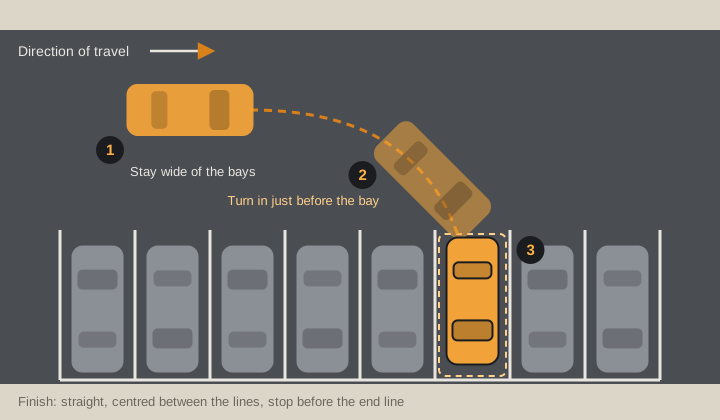
-
Approach slowly and wide
Drive slowly along the aisle, keeping about 2 m from the parked cars if there is room. The extra space lets you turn in without cutting the corner.
-
Choose a bay and check around
Pick an empty bay and check your mirrors. Signal if other road users could benefit, and look out for pedestrians walking between cars.
-
Turn in just before the bay
Start turning towards the bay just before the front of your car reaches it. A common cue is when the front of your car is roughly level with the line before the bay. Aim for the centre of the space.
Tip: Turn too early and you will clip the car on the near side. Turn too late and you will end up across the far line.
-
Straighten and centre the car
As the car lines up with the bay, straighten the steering. Check that the gap to the line is similar on both sides.
-
Stop before the end line
Drive in slowly and stop before the end line, kerb or wall in front of you. Apply the parking brake and select park or neutral.
How to reverse out of a parking bay safely
Leaving is where most car park bumps happen, so take it slowly:
- Check all around, including your blind spots, before you move.
- Reverse very slowly in a straight line until your front is clear of the cars beside you.
- Then turn the wheel to swing the front of the car towards your direction of travel, and keep looking both ways.
- Stop, select a forward gear and drive away.
If your view is blocked, stop and move back very gradually so other drivers and pedestrians can see you.
Common forward bay parking mistakes (and how to fix them)
- Approaching too close to the baysYou need a very tight turn and are likely to clip the car beside the bay. Swing wider.
- Turning too earlyThe side of your car cuts into the space next to yours. Wait until you are just before the bay.
- Driving in too farYou risk hitting the kerb, a wall or the car opposite. Look ahead and stop before the end line.
- Reversing out too quicklyPedestrians and cars in the aisle can appear suddenly. Reverse out at walking pace and keep checking.
What do examiners look for?
Where this manoeuvre is tested, examiners generally look for good control at low speed, all-round observation (especially when reversing out), and finishing inside the lines. One small correction is usually fine. Check your national driving authority for the exact requirements, for example the driving test guidance on GOV.UK for the UK.
Frequently asked questions
Is forward bay parking easier than reverse bay parking?
Driving in forwards is easier to learn and quicker. Reversing in is usually safer overall, because you can drive out forwards with a clear view.
How far from the bays should I be when I turn in?
About 2 m is a good target if the aisle allows it. The more space you leave, the gentler the turn and the less likely you are to clip the neighbouring car.
How do I know I am far enough into the bay?
Use the end line, kerb or wall ahead, or line up with the cars on either side. Stop with a little space in front so you do not touch anything.
Does forward bay parking come up on driving tests?
In some countries, yes. For example, on the UK test you may be asked to drive into a parking bay and then reverse out. Check your own country’s test requirements.
Can I practise forward bay parking online?
Yes. Parking Simulator is a free browser-based simulator with a car park where you can practise driving into bays between parked cars, with a score and examiner-style feedback.