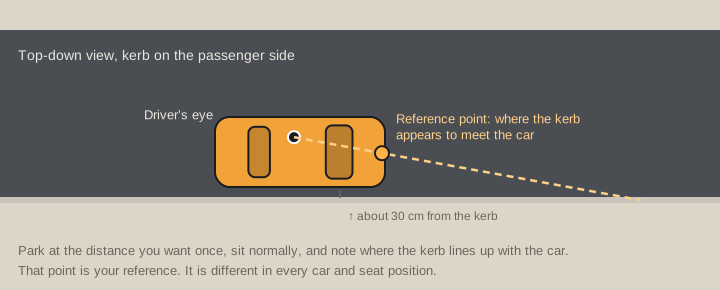
Most drivers judge the edges of their car with reference points: spots where the kerb or a line appears to meet part of the car from the driver’s seat when the car is at a known distance. Find yours by parking at the distance you want, for example about 30 cm from the kerb, sitting in your normal position and noting where the kerb lines up with the bonnet, dashboard or mirror. Reference points differ between cars and seat positions.
Key takeaways
- A reference point links what you see to where the car is.
- Set them up in your own car, in your normal seat position.
- Your side mirrors are reference points too, especially when reversing.
- Check them occasionally: a new seat position changes them.
What is a parking reference point?
From the driver’s seat you cannot see the corners of your car, so you use what you can see instead. A reference point is a spot on the car, such as a part of the bonnet, the dashboard or a mirror, where a kerb or line appears to sit when the car is in a known position. Once you know it, you can repeat that position without guessing.
Why is it hard to judge the kerb?
In a right-hand-traffic country the driver sits on the left, so the kerb you park against is on the far side of the car. The bonnet and doors hide it, which makes the car feel much closer to the kerb than it really is. Many learners stop too far away for this reason.
How to find your kerb reference point
You need a quiet place with a straight kerb and someone to help, or a way to check the distance yourself.
-
Park at the distance you want
Park parallel to the kerb at the distance you are aiming for, for example about 30 cm. Get out and check it.
-
Sit in your normal position
Adjust the seat as you always drive. Your reference points only work from the same eye position.
-
Note where the kerb meets the car
Look ahead and see where the kerb appears to disappear under the car. In many cars it lines up with a point on the bonnet or dashboard.
Tip: Put a small, removable sticker on the dashboard or remember a feature, such as a wiper or a badge.
-
Check your kerb-side mirror
Look at where the kerb sits in your kerb-side mirror at this distance. That is your mirror reference for reversing.
-
Test it
Drive away, then pull up again using only your reference points. Get out and check how close you were, and adjust if needed.
Other useful reference points
- Front of the car: park with your bumper a set distance from a wall or line and note where the line disappears under the bonnet.
- Stop lines: note where a painted line meets the bottom of your windscreen or a door pillar when your bumper is at the line.
- Mirror kerb check: many drivers tilt the kerb-side mirror down when reversing so the kerb stays in view, and some cars do this automatically in reverse.
What about parking sensors and cameras?
Sensors and cameras are helpful aids, but they do not show everything around the car. Whether you may use them on the driving test depends on the country and the test, so check your national driving authority. Either way, learn your reference points: they work in every situation.
Common parking reference points mistakes (and how to fix them)
- Guessing from the driver’s seatThe kerb looks closer than it is. Rely on your reference point, not the feeling.
- Changing your seat positionYour reference points move. Use the same seat and mirror settings every time.
- Copying someone else’s reference pointsEvery car is different. Use a friend’s points only as a starting idea, then check them in your car.
Frequently asked questions
How far from the kerb should I park?
Close and parallel without touching it. Many instructors aim for about 30 cm, but check what is expected in your country’s driving test.
Do reference points work in every car?
No. They depend on the car’s shape and your seat position, so find them again in each car you drive.
Can I use parking sensors or a camera on my driving test?
It depends on the country and the test. Check your national driving authority, and learn reference points either way.
Why do I always stop too far from the kerb?
Because the kerb is hidden on the far side of the car, so it feels closer than it is. A tested reference point fixes this.
Can I practise judging distance to the kerb online?
Yes. In Parking Simulator’s parallel parking exercise, the examiner-style report tells you your exact distance to the kerb for the front and rear wheels after every attempt.